In the late 1970s, Canadian media theorist Marshall McLuhan posited two types of sensory-cultural paradigms: visual and acoustic space. According to McLuhan, we in the industrialized West live in visual space. We transitioned to this during the time of the Greeks, and it was reinforced during the Renaissance. He writes that, since, “Western civilization has been mesmerized by a picture of the universe as a limited container in which all things are arranged according to the vanishing point, in linear geometric order.”
He continues, “Such is the power of Euclidian or visual space that we can’t live with a circle unless we square it.”
Acoustic space, he contends, existed for hundreds of thousands of years prior (and still outlives the Greeks in certain cultures). “The world was multicentered and reverberating,” he writes. “It was gyroscopic. Life was like being inside a sphere, 360 degrees without margins; swimming underwater; or balancing on a bicycle.” Acoustic space does not represent things “one-at-a-time” with the “uniform ethos of the alphabet.” Rather, it “comes to us from above, below, and the sides.”
This is not merely a morphological concept. McLuhan implies that whichever paradigm a culture accepts determines in large part that society’s “perception of sanity.” Optical, linear logic tends towards hierarchy, exclusion, and—McLuhan ventures—even violence: “something is either in that space or not.” I think this determination is political in an age of division and persecution.
So this exhibition is a thought experiment: is visual art doomed to visual space? Can visual artists escape the vanishing point and capture the multicentered and reverberating, non-hierarchical aspects of acoustic space?
GUEST CURATOR:
Danny Floyd is an artist, researcher, curator, and educator based in Chicago. He holds a BFA in Photography from RISD, an MA in Visual & Critical Studies, and an MFA in Sculpture, both from SAIC. He is an Assistant Professor, Adjunct of Visual & Critical Studies, and the Undergraduate Division at SAIC. He also served as the Exhibitions Director for ACRE. Since 2013, he has been an active part of Chicago’s artist-run space community through two programs, Ballroom Projects and Adler & Floyd. He has held curatorial residencies with ACRE and Chicago Artists Coalition. He was also awarded the Gaylord and Dorothy Donnelley Foundation Curatorial Fellowship in 2017. He has attended studio residencies at ACRE; AS220 in Providence, RI; Earthbound Moon in Eugene, OR; The Residency Project in Pasadena, CA; and The Roger Brown House in New Buffalo, MI. He began his teaching career in 2010 at a self-proclaimed “postmodern art camp” in Western Massachusetts for children aged 11 to 16 whose freewheeling ethos of interdisciplinary experimentation still informs his teaching and art-making.
Opening Reception:
Friday, February 6th
5-8pm
Closing hours with the curator:
Friday, February 27th
5-8pm
On view through Febuary 27th, 2026
-
 Tim StoneHappiness, 2023Gouache on paper18 x 24 inCourtesy of Arts Of LifeCopyright The Artistartsoflife - Tim Stone, Happiness, 2023$ 1,500.00
 -
Amy VogelThe Woods: Pink and Green, 2021Oil on linen24 x 18 in.
61 x 45.7 cm.Courtesy of Arts Of LifeCopyright The Artistartsoflife - Amy Vogel, The Woods: Pink and Green, 2021$ 6,000.00 -
Kacie LeesThe Center of the Early Universe, 2025Powder coated steel and fools gold hardware60 x 41 x 15 in.
152.4 x 104.1 x 38.1 cm.Courtesy of Arts Of LifeCopyright The Artistartsoflife - Kacie Lees, The Center of the Early Universe, 2025$ 2,500.00 -
Susan PasowiczSomething Irresistable, 2022Colored pencil and graphite on paper19 x 24 in.
48.3 x 61 cm.Courtesy of Arts of LifeCopyright the Artistartsoflife - Susan Pasowicz, Something Irresistable, 2022$ 2,000.00 -
Melissa McClungMother Reclining with Child, 2025Paper & glue collage9 x 6 in.
22.9 x 15.2 cm.Courtesy of Arts Of LifeCopyright The Artistartsoflife - Melissa McClung, Mother Reclining with Child, 2025$ 140.00 -
John PhelanUntitled, n.d.Acrylic on board11 x 14 in.
27.9 x 35.6 cm.Courtesy of Arts Of LifeCopyright The Artistartsoflife - John Phelan, Untitled, n.d.$ 300.00 -
Melissa McClungFestival Night, 2020Paper & glue collage7 x 5 in.
17.8 x 12.7 cm.Courtesy of Arts Of LifeCopyright The Artist -
Melissa McClungSpore Love, 2020Paper & glue collage7 x 5 in.
17.8 x 12.7 cm.Courtesy of Arts Of LifeCopyright The Artistartsoflife - Melissa McClung, Spore Love, 2020$ 100.00 -
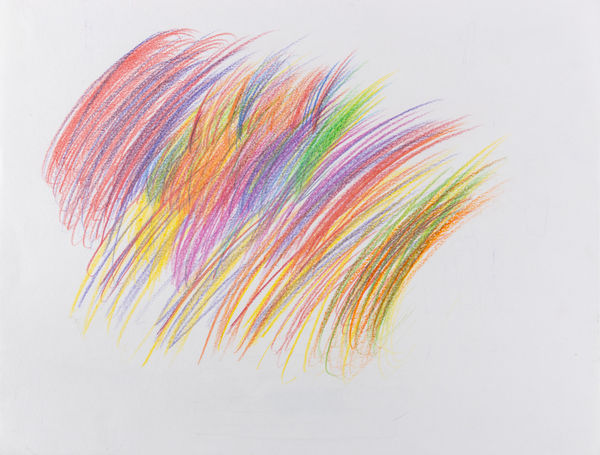
Carol PyesFireworks , 2020Colored pencil on paper9 x 12 in.
22.9 x 30.5 cm.Courtesy of Arts Of LifeCopyright The Artistartsoflife - Carol Pyes, Fireworks , 2020$ 250.00 -
Sonya BogdanovaCверхъесте́ственный дом, 2026Bisqued stoneware, acrylic, crayon, pencil11 x 14 x 11 in.
27.9 x 35.6 x 27.9 cm.Courtesy of Arts Of LifeCopyright The Artistartsoflife - Sonya Bogdanova, Cверхъесте́ственный дом, 2026$ 2,000.00 -
Kevin StuartA Saturday in June (Friends meet on a stoop), 2025Oil on linen84 x 54 in.
213.4 x 137.2 cm.Courtesy of Arts Of LifeCopyright The Artistartsoflife - Kevin Stuart, A Saturday in June (Friends meet on a stoop), 2025$ 2,500.00 -
Kacie LeesTube Drawing #01, 2025Hand-pulled glass tubing, krypton, cable, transformer26 x 1 ½ in.
66 x 3.8 cm.Courtesy of Arts Of LifeCopyright The Artistartsoflife - Kacie Lees, Tube Drawing #01, 2025$ 1,000.00 -
John PhelanUntitled, n.d.Acrylic on paper9 x 12 in.
22.9 x 30.5 cm.Courtesy of Arts Of LifeCopyright The Artistartsoflife - John Phelan, Untitled, n.d.$ 250.00 -
Tim StoneUntitled, 2022Graphite on paper11 x 14 in.
27.9 x 35.6 cm.Courtesy of Arts Of LifeCopyright The Artistartsoflife - Tim Stone, Untitled, 2022$ 700.00 -
Amy VogelThe Woods: Two Blues and Yellow, 2021Oil on linen24 x 18 in.
61 x 45.7 cm.Courtesy of Arts Of LifeCopyright The Artistartsoflife - Amy Vogel, The Woods: Two Blues and Yellow, 2021$ 6,000.00 -
Susan PasowiczOrange County, 2024Colored pencil on paper15 x 20 in.
38.1 x 50.8 cm.Courtesy of Arts of LifeCopyright The Artistartsoflife - Susan Pasowicz, Orange County, 2024$ 1,500.00




Kacie Lees is Chicago-based neon artist, printmaker, and metal worker who explores relationships between natural phenomena, human perception, and time. Her 2021 text, Neon Primer, continues to be the go-to manual for creating neon artworks, with first edition copies homed in distinguished collections such as Corning Museum of Glass’ Rakow Research Library (Corning, NY) and the Joan Flasch Artist Book Collection and Archive (Chicago, IL). Lees leads innovative, media-rich courses from coast to coast at institutions including New York University, the School of the Art Institute of Chicago, and the Museum of Neon Art in Los Angeles.
MELISSA McCLUNG (she/her) is a filmmaker, animator, visual artist and professor based in Western Massachusetts. Melissa has above-the-line credits on films that have premiered at SXSW, CPH:DOX, Ann Arbor Film Festival, and Maryland Film Festival, among many others. Melissa began making collages during the pandemic while listening to Agatha Christie audiobooks. She makes work in New England, solo and with regional collaborators. Melissa earned her MFA in Film from Vermont College of Fine Arts and her BA from Vassar College.
Born in Chicago in 1955, Susan Pasowicz is a dreamer and visionary. Fascinated by organic forms, mystery, and the supernatural, Pasowicz creates atmospheric spaces and whimsical landscapes in graphite and colored pencil. Informed by both the ordinary and the magical, hints of her memories and the everyday become tangled in webs of amorphous shapes and wispy, hair-like marks. Sometimes using both hands or multiple drawing implements simultaneously, her delicate mark-making gradually accumulates and becomes layered on the paper's surface. Pasowicz’s work transports the viewer to nebulous, fantastical environments where mirrors, portals, tunnels, windows, and doors appear as recurring motifs. With a process driven by intuitive abstraction and rendering visible the invisible, her dream-like drawings embody a visual language that echoes the mediumistic works of Georgiana Houghton and Emma Kunz.Pasowicz’s selected exhibitions include Drawing On at Patient Info, Sugar Town at Ruschman, Open Planet Project at N:News Museum in Seoul, South Korea, Human Resources at Chicago Artists Coalition, Untitled Art Fair in Miami, the Outsider Art Fair in NYC, EXPO Chicago, Barely Fair, as well as Spirit Spirits, In Bloom, Electric Pink Lemonade, and All Well and Good at Circle Contemporary.“I usually draw tunnels, portals, curly top trees, clouds, the future. As things come into my head, I draw on a piece of paper; sometimes I use both hands and two colors at the same time. I don’t want to do the same thing I did before. You can’t be picking the same titles as the others, because it won’t be an individual thing. It depends how long I work on a drawing. If it’s a major piece of paper, I could work on it quite a long time before it’s proper. I like seeing exhibitions so I can learn from other peoples’ artwork, you can pick up different types of ideas.”
John Phelan has an intuitive approach to art-making, working from imagination and memory to depict meaningful ideas or personal experiences. Recurring motifs anchor his compositions – text fragments, boxes, symbols, trains, clocks, churches, and simplified figures. His distinct drawings are often reminiscent of aerial maps or architectural floor plans. Currently, his work reflects a methodical process of mark-making, which accumulates over time to create directional swaths of color. He frequently rotates and covers both sides of the paper while working, causing the surface to become weathered and sometimes burnished.
Whimsy, charm, and joy are captured across Carol Pyes’ colored pencil drawings. Her artistic style emerges through softly rendered hues within pared-down settings. Pyes moves adeptly across a variety of mediums —often mixing them to increase the depth and complexity of her artwork. Regardless of medium, she stays true to her preferred subjects: loved ones, moments of joy, and most importantly, cats. “Well I like cats a lot. I’m a cat person. They make me feel good inside… warm inside. They’re so cuddly!” Pyes is driven by her unique gift for routine to revisit consistent subject matter in similar ways. This process is supported by her methodological approach. She gives insight into this process while she’s working by talking through each step of her plan. “It makes me feel good because I enjoy it. It makes the time go by.”
Tim Stone was born in Park Ridge in 1973, where he grew up living with his family. Over the years, Stone has created an expansive and cohesive body of work across media, including graphite, watercolor, and acrylic. For the past few years he has focused primarily on grayscale drawings of loose grids in graphite, with titles that hint at personal inspirations. Focused and methodical in his practice, he maintains a diligent studio routine and steadfast artistic vision informed by concepts of abstraction. Stone’s process is driven by labor-intensive, repetitive mark-making that burnishes the graphite and slowly wears away the surface of the paper over time. He’s also an active member of the curatorial committee, assisting guest curators with exhibitions at Circle Contemporary featuring studio artists alongside artists from the broader contemporary art community. “I start drawing squares with a B pencil. Then I keep drawing over them until they become glossy and thick. The B pencil helps the graphite become bolder and shinier, then some of it fades away.”
Kevin Stuart is an artist living and working in Chicago, he also occasionally runs a carl.
Amy Vogel has had solo and two-person exhibitions at Prats Nogueras Blanchard, Madrid; Paul Kotula Projects, Detroit, MI; Asphodel Gallery, NY; Larissa Goldston, NY; Edward Mitterrand, Geneva; and Air de Paris, Paris. In 2014 she had a survey of 15 years' work, Amy Vogel: A Paraperspective, at the Cleve Carney Gallery at the College of DuPage. She has participated in group shows at Secrist Beach Gallery, Chicago; The Franklin, Chicago; The Design Museum of Chicago; Western Exhibitions, Chicago; White Columns, NY; The Suburban, Oak Park, FRAC Haute-Normandie, Sotteville-lès-Roue, Francesca Pia, Zürich, and other venues. Vogel has collaborated with Joseph Grigely on many projects, including shows at the Orange County Museum of Art; the MCA, Chicago; The Douglas Hyde Gallery, Dublin; the Berlin Biennial; the Yokohama Triennial; Mathildenhöfe, Darmstadt; the French Academy in Rome, and other international venues. She has had reviews in national and international periodicals, including the Chicago Tribune, the New York Times, and Artforum.


